RANTINGS AND RAVINGS OF AN OLD MAN TRULY RUINED BY SPORT

Friday, June 1, 2018

FFGMT is now for sale on Amazon Books
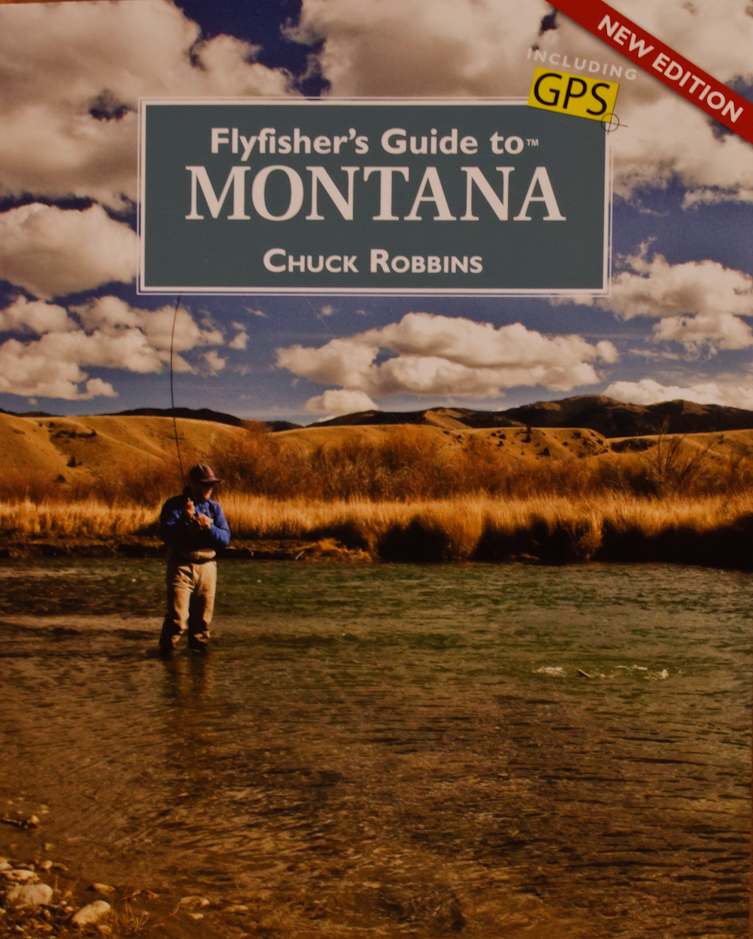
As of today, June 1, 2018 the all new 4th Edition, larger format, full color, Flyfisher's Guide to Montana is up and running on Amazon Books (https://www.amazon.com/Flyfishers-Guide-Montana-Chuck-Robbins/dp/1940239222). To order your copy please click on Book Image in the right hand column.

Detailed descriptions of all of Montana major trout rivers, lakes and reservoirs plus dozens of smaller waters, over 40 full color maps/GPS coordinates, depicting Fishing Access Sites, boat ramps, campgrounds, public lands and more including Montana hatch chart and favorite flies, trip planning suggestions, angling tactics, Montana Stream Access Law, Outfitters and Fly Shops. Everything needed under one cover to plan your next Montana fly fishing adventure.

FYI, I am a licensed Montana fishing guide (20 years), author of 5 books and dozens of magazine, e-zine, newspaper articles, several of which have been collected in anthologies. My office wall is papered with OWAA and NOWA Excellence-In-Craft awards and in 2013 was awarded NOWA's most prestigious Enos Bradner award for EIC and Outdoor Writing/Photography Professionalism. In a long career now spanning about 50 years, along with wife, Gale, we have published countless photographs, fly fished all over the country and in several Canadian Provinces. Once the fishing stops we--Gale, me and our German wire-haired pointers chase wild upland birds all over Montana, Idaho, North Dakota and Arizona.

Thanks for stoppin' by...Chuck n Gale n the wirehair sisters.

Monday, April 30, 2018

Flyfisher's Guide to Montana (New Full Color Edition)

New Edition; 8 1/2 x 11; Full color; 253 pages; all major Montana Trout rivers, lakes and reservoirs, as well as dozens off the beaten path waters, over 40 full color maps/GPS coordinates showing public land, public access sites, river miles, boat ramps, campgrounds and other major features. 

Hot off the Press: Lots of color photos, lots of new, updated and/or revised text. Forty-plus, full page, full color maps/GPS coordinates showing public land/access sites, river miles, boat ramps, campgrounds and other major features. Featuring detailed descriptions and advice for fly fishing and access to dozens of rivers, creeks, lakes and reservoirs. Montana fly chart, full color fly pattern photos, angling tactics, suggested gear, rigs, trip planning and more. Mostly about trout but other species such as carp are covered as well. Thinking of doing the Smith River? Be sure to check out what Mike Geary, Lewis and Clark Expeditions (largest outfitter on the river) has to say on what truly is one of the most unique float trips in the lower 48. For each region I've added trip planning suggestions for Easy Access, Weekend Getaways, Week-Long Vacations and Area Fly-Shops and Outfitters. 253 pages/$29.95; Wilderness Adventures Press.

Monday, April 23, 2018

Fly Fishing Tip #4 (Part 1)

The most important tool in a trout angler's kit
Poll question of the day: What is the most important tool in a trout angler's kit? If you answered “stream thermometer” quit reading and go fishing.

Based based on countless conversations with fellow anglers, how water temperatures affect trout be-havior and thus our fishing success is the least understood piece of the fly fishing puzzle. In an effort to solve the puzzle, I set a course to learn as much as possible and so what follows is the result of decades spent talking to biologists, reading everything I could get my hands on, combined with decades of steadfast stream thermometer use and studious observation. As with most investigations some of the stuff I uncovered seemed spot on and, of course, some of it didn’t quite fit my personal observations.

Anyway, here ya go:

The ideal water temperature for brown trout is about 60°F; for rainbow and brook trout a cou-ple degrees less.

Trout are most active at their individual ideal water temperature. In general trout (aquatic food chain) engines are firing on all cylinders in water ranging from 55-65°F.

Oxygen plays a major roll. Oxygen levels rise and fall more or less in direct relationship to both water temperature and flow rate. Fast water always contains more oxygen.

On the high end, once temperatures reach about 70-72°F metabolisms slow down and trout begin to migrate to cooler, more oxygenated water—deep pools, riffles, runs and in extreme situations, often abandon completely long stretches of the main stem, migrate long distances to spring holes and/or mouths of cold tributaries.

On the low end, once water temperatures fall to the low 50s metabolisms slow down.  But, de-spite the higher oxygen levels in fast water, trout migrate to deep, slow pools to conserve energy.

The good news is once the trout become conditioned to lower water temperatures they still must eat. As a rule of thumb fish low and slow. Even in dead of winter trout often gang up in eddies and backwaters to gorge on hatching midges.

Two words I’ve learned to never utter in a fishing discussion are “always and never.”  So yes, some trout become conditioned to higher and lower water temperatures and thus fall outside the above parameters. The Firehole is a good example on the high end and the San Juan, below Navajo Dam, where the water enters at a chilly 39°F year around, is a prime example on the low end.

Because of depleted oxygen levels at both ends, anglers need to bring trout to hand quickly, get the hook out and back in the water pronto—or kill it—your call. But trust me any trout mishandled even a little bit, in 70°F+ water is in serious jeopardy.  At the low end not so much but still the quicker the ordeal the better.

The faster the water temperature is rising above or falling from the ideal the slower the fishing.

Friday, April 20, 2018

Fly Fishing Tip #3: Fish Close

Terry Throckmorton knows...Do you?

 As a young man I was fortunate to land in central Pennsylvania,  a fly fishing hot-bed and the calving ground for what might be the largest mob of world class fly anglers ever. Best thing, I got to know, befriend and fish often with a bunch of them. It seemed every day I learned something new, or maybe more to the point, everyday was a challenge just trying my damnedest to look at least semi-competent.

Now all these guys were great casters, several could toss an entire fly line with no rod at all. Of course this was just show-off stuff. When the chips were down, game-on, time to catch fish, every single one reeled-up and essentially opened the same playbook.

Act 1; Scene 1:

Look before you leap and when you leap start with little baby steps. In other words take a look around: Are bugs hatching, trout swirling the surface? If not what are the obvious targets? Plan your attack. And most urgent, start CLOSEl and THEN gradually work UP and across toward that fishy run against on the far bank. Ask any guide and he will tell you the best way to evaluate angler experience is where that first cast of the day is aimed. Experienced fish close. The rest charge right in, flail away, line every trout within range, time to take a deep breath, start anew.

”O-o-okay lets move on up maybe plan our attack a bit better, eh?”

How close? If riffles, runs, etc. start literally right at your feet—no kidding. If possible keep the sun at your back but avoid casting shadows—yourself, rod, line—over the target area. Stalk as close as possible to the target. Cover the close water first then carefully stalk into position to cover the next and so on.

There are many things to like about short casts. The many conflicting currents between you and that fish rising way out yonder make controlling the drift difficult to impossible the more of those currents your line falls upon. Short casts often allow you to raise the rod and lift the line over squirrely currents and even obstacles which tend to kill drag free drifts—in most cases the difference between knockin’ em dead and so-so. Within reason, accuracy decreases in direct proportion to length of line.

Anyway as a wise man once noted, you won’t know if ya don’t give it a go. 

Wednesday, April 18, 2018

Fly Fishing Tip #2

Angler casting a 9' 5wt, on the wide waters at Buffalo Ford, YNP.
Rod/Line

Talking now fly fishing trout in moving water :

It all starts with the cast. And to make a cast you need a rod and a line. Of course a reel is nice and you also need a leader/tippet and a fly—stick with me and we’ll  get those in later.

Maybe because I started with a telescoping steel rod/automatic reel (whiz-z-z-z...whap!) , a worn out level line with a short (who knows how heavy?) piece of mono square-knotted to the end of the fly line. I find it hard to blame any shortcomings—sloppy, off the mark, whatever—on the rod.  For at least 90% of trout fishing situations any old rod, especially any old rod with matching Double Taper or Weight Forward floating line and a properly constructed leader and tippet will get it done provided...YOU DO YOUR DUE DILIGENCE AND LEARN TO CAST.

If you like me prefer DIY as opposed to group therapy (e.g. fly fishing 101 school/seminar) a good way to start is to Google:  U-tube, Fly fishing, casting...
The lawn is a good place. Start with a basic cast. Practice until the mechanics are as familiar as, say, tying your shoes.  Strive to keep false casts to a minimum. To lengthen the cast strip line off the reel and feed it on the backcast. Once you’ve mastered the basics, put out a target. Aim for accuracy from just a few feet out to say 50 feet. That done up the ante: practice casting up under over-hanging tree limbs; around and through bushes.

When you can consistently pull off the above without thinking go fishing. 

While there’s a lot to like about fiberglass and bamboo, for most of us graphite is it. Some of today’s rods cost more than a lot of my trucks. Trust me, a more expensive, higher modulus (whatever the hell that means) rod is the least of your worries. With apologies to Lee Wulff,  the rod is last thing you should change. And these days even the cheapest graphite is way better than even the best of my early fiberglass rod—better made, better casting tool and way lighter.

Remember now, we’re talking trout fishing in moving water only. So repeat after me:  For at least 90% of my fishing I need a 9’-5 or 6 wt. graphite rod, no matter how big the river or how tiny the crick and I don’t need to remortgage the house to get a decent rod. 

For what it’s worth I have cast several Redington, TFO and Echo rods which retail for well under $200 that in my opinion fit the bill nicely. I do not have a nickel in any of these companies and I know of several other makes, similar priced, said to perform well, but I haven’t personally cast them so...

Tuesday, April 17, 2018

Fly Fishing Tip #1

The Upper Gallatin River in YNP is a great place to hone your fly fishing skills. 
Not many of us can hold a 40-hour per week job,  fly fish all day, everyday, for an entire summer. But, lucky me, that first summer after high school, working the graveyard shift in a local mill allowed me the freedom to do just that—like how much (or, more to the point, how little) sleep does an 18-year old male really need? Right.

That come mid-July, Billy, and I were pretty much fished out and for the rest of the summer behaved in less insane fashion is not the point. The point is we took full advantage of a once in a lifetime opportunity to jump start what might otherwise have been a long, steep learning curve.  All that fishing allowed us to learn and hone our skills in a relatively short time. 

While nowhere close to master-class, by summers end our catch rate—though still nothing to write home about—was off the charts compared to our earlier attempts. But the big deal was discovering how much we enjoyed fishing new water, the challenge of fooling difficult, pulling off the impossible shot and that a good day had little to do with numbers or size but rather how well graded our fishing. 
So with that in mind, here ya go: Tip Numero Uno: FISH MORE.

Tuesday, March 20, 2018

YELLOWSTONE NATIONAL PARK BANS FELT SOLED WADING BOOTS

In YNP these are now Verboten!!!
Yellowstone NP recently announced when the season opens May 26, 2018 felt soles are no longer legal. And, in case you wondered how serious, violations can result in a fine of $5000 and up to 6 months in the slammer.

There is no ban on felt soles in the surrounding states: Wyoming, Idaho and Montana. But the spread of invasive species is real so please heed the following:

Things you can do to prevent the spread of invasive species on your boots:
Wash your felt wading boots with a bleach/water mixture after each trip.
Allow felt waders or boots to dry entirely, this should kill most waterborne invasive species
Buy a rubber sole and replace your felt boots

In my experience (I wear both) rubber soles are no where near as good for wading slippery rivers such as the Big Hole and Madison. But they are way more comfortable for hiking and work pretty well for less rocky rivers such as the Beaverhead and Ruby.

So on the plus side rubber-soled boots pose less of health hazard to our rivers. But even with studs they don’t grip river rocks as well as felt.

But rubber is way better than felt for hiking.  And on ice and snow, rubber rules...Period.
Still, most of us give high marks to felt for its superior traction. And I would imagine just as many of scoff at the idea that felt is really the culprit in the first beginning. Siting how many brands which removed felt from their catalogs have now reversed course. 

In my opinion anyone who tells you steel-studded rubber soles are superior to felt soles is either lying or didn’t understand the question. But...

But there are a couple solutions...

Patagonia features a line of boots which feature aluminum bars in lieu of steel  studs.  Like rubber vs. felt, the traction suppled by aluminum over steel is off the charts. Aluminum sticks to rocks like super glue sticks your fingers together...OK so I exaggerate but you get my drift...Right? Patagonia also makes a strap on sandal which features aluminum bars.

In case you are wondering:

  • I don’t own either product, but I do have guide buddies who swear by them. 
  • I am not affiliated with Patagonia in any way. 

Bottom line: If you plan to fish Yellowstone either deal with it, ditch the felt, or be sure to pack extra cash.

Monday, March 19, 2018

Clean Water/Public Lands: Vital to Our Way of Life
A long life, every chance spent hunting and fishing all over the country and in several Canadian provinces, once seemed the perfect way to avoid being bogged down fretting over what seems to be of late a thundering herd of crooked, self-serving politicians. Bent on ripping the guts out of long-standing  laws and policies designed to protect and enhance continued public access to public lands, assurances for clean water,  wise management of wildlife and fish populations, anything to do with a protecting and enhancing the environment in general and whatever else stands in the way of lining greedy pockets.

What a foolish idea on my part, eh?

Under cover of March Madness, which has so many of us preoccupied Congress is wrangling how best to sneak in as many dirty riders as possible before a vote comes up on the must pass Spending Bill. Imagine! Currently there are an astounding 80 “anti-environmental” riders attached to the bill that attack our public lands, remove protections that mandate our rights to clean water and even the air we breathe and a whole lot more.

One that will have alarming results for not only us fisher folks but for anyone who likes the idea of taking a drink of water not falling ill (dead?) from some deadly pollutant is the quiet move to make it possible for EPA to repeal the Clean Waters Act without public or legal oversight.  Of course the key words here are “without public or legal oversight.” This despite an overwhelming majority citizens have voiced favorable support  of the CWA. In other words with a stroke of the pen the Administration can do any damn thing it wants.  Democracy? Not my definition...

Time is running out to demand a Clean Spending Bill—one free of shameful riders. Contact your legislators and tell them Hands Off!

Saturday, March 17, 2018

2018 State of the Beaverhead Watershed

Beav bow/photo by my late friend, Dick Moore, who caught it and shot the photo
Recently the Lewis and Clark Chapter of Montana T.U. met as always at the Anderson and Platt Fly Shop just outside Dillon.

Matt Jaeger, FWP Fisheries Biologist, presented an overview of the ongoing work to protect and enhance what’s left of the native westslope cutthroat trout population within the Beaverhead and Ruby river watersheds.  In brief the process begins by identifying genetically pure populations thru state of the art DNA analysis. The next step is to identify streams with either a natural block to upstream migration or to identify a spot suitable to build a man-made block. Man-made blocks are not cheap so funding becomes a major hurdle.

The main culprit to maintaining genetically pure populations is thru hybridization with love to hate (or much loved, depending) rainbow trout. Rainbows are great travelers as researchers found out in assessing the potential dangers the proposed Black Butte Mine might pose with Smith River trout.  To their surprise not only do Smith River rainbows spawn in Sheep Creek (mine site) but so do some Missouri River bows—BTW a 400 mile round trip.

The ongoing debate on how best to protect and enhance the fluvial grayling population in the Red Rocks National Wildlife Refuge. Several years ago refuge managers determined the Yellowstone  cutts were simply eating the grayling to extinction. Kill the cutts. Problem solved...Not so fast. Despite killing hundreds, maybe thousands, through extended, high-creel limit, fishing seasons, in conjunction with in stream traps, grayling numbers continue to crash.

Meanwhile Matt and crew had pretty much concluded cutts were not the culprits and put the blame on degraded/non-existent spawning habitat largely due to siltation from loss of scouring flows enough to clean spawning gravels and a calamitous loss of over-winter habitat due to a severe drop in oxygen levels in Upper Red Rocks Lake.  Snow cover drives oxygen levels in the the lake—too much, for too long oxygen takes a dive.  Beaver dams prevent scouring of spawning gravels. Only way to help the lake situation is make it deeper (cost prohibitive) but breaching the beaver dams, increasing the flow, scouring the spawning gravels is a possibility. Matt and his crew plan began last spring breaching the dams and have three more years to see what happens.  Refuge managers are apparently not convinced so how this one will play out remains in limbo.

Clark Canyon Reservoir’s recent crash of big fish (8-10 lbs. plus) is due mostly to a decline in the quality of Eagle strain rainbows produced by the Ennis National Fish Hatchery. The hatchery supplies fish to, I think, 13 states and except for Matt none are interested in anything but put and take fisheries...Sad but true, the only solution is to somehow get enough from the source, Eagle Lake, California...Matt is on the  track but still not sure how will work out.

Last season the Beaverhead recovered some from the combination of a too low overwinter flow and an out of balanced population of mid-size fish crowding out the big boys and girls. This winter flows are up some somewhat reducing the overcrowding situation and with the reservoir expected to fill decent flows should continue.  The consensus of guides and outfitters in the room suggested low trout numbers below Hildreth Bridge; Matt’s electroshocking survey did not agree. My take (and that of a couple fellow guides) was at first seemed to agree with the above consensus but once the flow stabilized seemed trout, many of decent size were everywhere in the Henne-Hopper section.  For what it’s worth, I could hardly buy a fish between Hildreth and Henne the few times I guided it. About 2600 trout per mile live in the upper river.

The Ruby: Numbers (about 1600 per mile) and size of brown trout from the dam to Silver Springs was about average; below Silver Springs not so hot.  In my experience and those of the guides I work with the numbers are spot on... Less water due to irrigation demand is the likely culprit. Hopefully something like a drought management plan can be worked out with ranchers and farmers to maintain a more friendly flow regime. Keep your fingers crossed.

Saturday, February 24, 2018

Trump Proposes to Gut (90%) the Land and Water Conservation Fund

Missouri River Near Fort Peck
As part of a budget proposal that amounts to a Valentine to special interests, the Trump administration wants devastating cuts to the Land and Water Conservation Fund; America's most important conservation tool.

The Land and Water Conservation Fund was established by Congress in 1964 to fulfill a bipartisan commitment to safeguard our natural areas, water resources and cultural heritage, and to provide recreation opportunities to all Americans. Using zero taxpayer dollars, the fund invests earnings from offshore oil and gas leasing to help strengthen communities, preserve our history and protect our national endowment of lands and waters. The LWCF program can be divided into the  State Side  which provides grants to State and local governments, and the Federal Side which is used to acquire lands, waters, and interests therein necessary to achieve the natural, cultural, wildlife, and recreation management objectives of federal land management agencies.

Red Rocks Lakes National Wildlife Refuge
Red Rock Lakes National Wildlife Refuge, a place where creeks flow freely, wildlife thrives and visitors can find solitude and astounding natural beauty is just one of many public lands that will adversely affected should Trump's proposal fly. Located in southwest Montana, the refuge is bounded by high mountains, wildflower filled meadows, grasslands, marshes and forests. This rich system nurtures many mammals, waterfowl, raptors, songbirds and a wide variety of fish. Sage grouse and native Arctic grayling live here as do grizzly bears, wolves and peregrine falcons. 

LWCF has helped to procure 70% of Montana State Fishing Access Sites
Since 1964, the LWCF has resulted in roughly $16 billion in spending nationwide, protecting everything from backcountry national forest lands to urban parks. Montana has received over $400 million in funding from LWCF. These funds have protected important lands in the Blackfoot Valley, on the Rocky Mountain Front, in the Greater Yellowstone region, and all over the state. LWCF funds have also been used to acquire key parcels that open up large areas of “land-locked” public land for hunting and fishing.


Saturday, February 10, 2018

UPDATED, FULL COLOR, 81/2x11, FLYFISHER'S GUIDE TO MONTANA

Clark Canyon Reservoir bows are indeed fat and handsome critters...


Recently I finished editing the galleys for the soon to be released updated, full color, larger format (81/2 x 11 inches) Flyfisher's Guide to Montana (Wilderness Adventures Press).

While the color photos are a big improvement the full color, larger river maps are much more user friendly. As with the past editions GPS coordinates are included.

Since its been a while since I fished the Smith River I asked longtime outfitter Mike Geary,  Lewis and Clark Expeditions for his take on what is truly a unique angling experience.

Because hatch charts at best show approximate dates when to expect whatever insects. And the best way I know to pin down what is hatching right now on the river(s) you expect to fish is to contact or visit a local fly shop, I've eliminated the individual river hatch charts and combined them into one which covers the entire state. So if you plan to visit in say, June, and want to bring your own flies check the chart, tie up whatever patterns and you should at least be in the ballpark.

I've expanded the "Angling Tactics" section and included an "Overview" of each region as well as "Trip Planning Considerations" for each region.

The "Back of the Book" section includes full-color Recommended Flies, Catch and Release, Stream Etiquette, Planning A Trip, Montana Stream Access Law, Montana Gamefish, and Hazards.

Last but not least I've tried to update any changes in our rivers or lakes and added a few which somehow got over-looked in past editions.

As always nothing in this book is meant to deceive and any errors or false information is simply an oversight on my part. That said, I would be forever beholdin' if you would point out so can correct it in future editions.

Chuck Robbins
Dillon, MT
2018 

Sunday, December 17, 2017

Maggie McGoo: My Last Best Pennsylvania Rough-Shooting Dog
Previously (Part 11, Boot Camp) I related how in Maggie’s first season (age 6 months) ruffed grouse in our neck of woods had hit rock bottom—even with the big dogs on the ground we went days on end with seldom a bird contact. It seemed grouse, like Pennsylvania’s wild ringnecks,  were all but goners. The woodcock flight fizzled as well.

And so, for the first and only time in my life, we spent the winter gunning pen-raised quail and roosters.

I’m a strong believer too many tame birds ranks high among the many reasons some really well-bred, well-trained dogs never develop into top-notch wild bird mavens. The worst thing is when the young dog learns it can get away with crowding tame birds and breaking that habit is too often way beyond the capabilities of most of us John Q. Amateur dog trainers.

But Mags was different.  For whatever reasons, she pointed tame birds staunchly,  relocated as necessary but very carefully—catlike—and rarely crowded.

We shot a lot of birds over her points that winter.  But every now and then her sire’s infamous stubborn streak reared its ugly head. Acting as if she’d never smelled a bird, busting birds left and right and, worse, refusing to comply voice or whistle commands until she damn-well felt like it.
So starting in early spring and all thru the summer three days on and three days off  it was back to the basics in the yard and on the training table. I didn’t like it any more than she did but I vowed to by God break the “stubborn bitch” once and for all or...

Or as Gale said, “Get over it, get on with your life or get done with her, you’re driving yourself mad and me insane.”

If this were a fairy tale we’d all be living happily ever after. Mags would be hunting lights out all day every day.  Grouse would be thick and I would be knockin’ ‘em dead. But didn’t exactly work that way.  As turned out PA grouse would never again be “thick.” Your intrepid reporter would forever remain the streak shooter of yore.  And Mags...

Well when the so-called dog training season opened August 15 (meaning  can now run dogs in the field) it seemed she’d hit a wall. Near perfection for days on end always followed by a day or two flipping me the bird.

So I took Gale’s advice.  Ditched the yard stuff for good and, for better or worse, took to the woods. Bird numbers were far from great but at least better.  Free at last of ropes and chains, Mags turned the corner and morphed into the dog  I’d always envisioned.
 
I always liked the late season best.  Less competition we could pretty much hunt wherever, whenever.  Grouse seemed to hold a little better and with less food available were far more predictable. And like me, the dogs just seemed a bit more juiced by the snow and cold.

For me, that first week of the late season was by far the best week of grouse hunting ever. With Mags hunting lights out and me shooting out my butt, well after all we’d gone through it was beyond freakin’ wonderful...

But then one day I found Mags pointing at grape tangle. Same look in her eye, same intensity but instead of tail ramrod straight, it was bent and listing to one side. Don’t get me wrong here, frankly I do not give a good goddamn about style points. But when next time she pointed same I knew something was wrong. Worse, in the house more and more we found her standing, tail between her legs, obviously distressed, or worse in real pain.

So I called vet buddy, Mike Moss, and he said, “Bring her in sounds like a ruptured tail-disc.”

To make a long, really sad (actually torturous as hell) story short:  X-ray indeed showed a tail-disc injury (not a big deal). But to be safe Mike x-rayed the rest of her spine and though no further spinal injury the one above her chest showed a severely enlarged heart.

For the next 48 hours Mike moved into the office and drained fluid as it developed until at last it coagulated such he could no longer draw with a syringe.

“Chuck, I’ve done all can do. Only thing left is open heart surgery, only place is Cornell, she needs to get there quick, cost is at least $5000, chance of survival less than 5%.”

Next day we buried her on a knoll over-looking  the  spot she pointed that last grouse.

Up Next:  The Montana  Wirehairs...

Sunday, December 3, 2017

Braised Deer Shanks...Try 'em, you'll love 'em...
Wanted: Eight-legged Antelope, Deer and/or Elk

I shot my first whitetail at age 12. Many deer later around age 70 I read a recipe in Montana Outdoors for braised venison shanks.

Ever since that first deer what to do with the shanks had always been an issue—grind them up and spend the next week cleaning the grinder, carve them up and spend hours peeling off the silver skin to say nothing of those gawdawful tendons. Anyway it took all of about 30 seconds to decide what to do this time around with the four elk shanks still hanging in the garage.

Beyond sawing off the elk shanks and helping Gale with the heavy lifting (cast iron Dutch Oven is not light, in case you wondered) the credit for THE most delicious venison dish I’ve ever eaten goes entirely to Tom Dixon (who wrote the piece) and of course to Chef Gale who made sure it all went together and turned out properly. 

While the shanks were cooking I did a little research and came up with this: Cooked on low heat (300° or so) for several hours (4 or so) in some sort of broth the meat is super flavorful and all the nasty stuff melts away, further enriching and somewhat thickening the broth (Gale has used chicken and beef broth some chefs suggest venison broth) and rendering the meat almost too tender to require chewing. According to Shaw the shank muscles work harder than other muscles and the more work the richer the flavor.  Remember I’m just the messenger…

So begin by browning the shanks well in your favorite cooking oil, lard or,  as Shaw suggests, duck fat. Go slow and turn the shanks often until every surface except the bone is well-browned. Beware: Too much on the bone side and the shank will fall apart…Not good.

Once browned, Gale adds enough broth to cover the meaty part of the shanks, a cup or so red wine, zest of a lemon, butter, her favorite spices and a small peeled and diced onion. Cover, put in preheated oven and then we take the Wire Sisters out for a run. Returning couple hours later she adds other veggies (any sooner they’ll turn to mush or worse, flat out disintegrate (though some recipes suggest straining and others suggest a food processor), adds liquid as needed and returns to oven until the meat starts to drop off the bone…

Serve over mashed potatoes, add a glass of wine and ENJOY…Trust me you will not be disappointed.

Thursday, November 30, 2017

This ol' gun has done me good...
This year marks the 30th season tramping the uplands toting an over and under, 20 ga. Browning Citori. Having suffered countless miles, in thick and uncivil places, the stock and forearm are nicked and scarred, the bluing well-worn but otherwise the old gun is as good as new.

I bought it new (can’t recall how much) from the Grice Gun Shop in Clearfield, PA. As Gale was quick to question “with a half-dozen other shotguns in the gun cabinet do you really need another?” Indeed a silly question, one difficult to answer. But we bird hunters are seldom satisfied. Miss a bird or two and well, you know, it’s never the operator, always that damned gun.

I bought it in late spring. By a strange coincidence just a couple days after getting my butt kicked at the season’s first Sporting Clays shoot—imagine? It came equipped with modified and full choke tubes but naturally I needed more of a selection and purchased several others—open, skeet 1 & 2, improved cylinder, improved modified and extra full. And don’t even bother to point out that after 30 seasons I have yet to even open the latter two containers, and not a single shot fired through the full choke tube because… Well hell, ya just never know so tis best to be prepared. Right.

Besides the 12 ga. Elsie was too heavy, choked modified/full and never did fit. The 16 ga. Model 12 was cursed with a modified barrel—worse, on the tight side, way too tight for early season grouse and woodcock, for-get-it. Ditto the Browning Sweet Sixteen and the Special Field 870—granted the spiffy as hell custom straight-grip stock was pretty to look at, but way too heavy and never did quite fit.  And while the ancient Fulton Arms 16 ga served me well as a kid, it was way too clunky, stocked beyond ugly and choked way too tight for serious bird shooting. And nobody in his right mind would tote the Browning Superposed 12 ga. ,sporting 30-inch barrels choked full and fuller.

I rest my case.

At this stage (61 seasons and counting) barring unforeseen disaster the Citori is it. Most days I shoot it pretty well and those not so honky dory well, who gives a rat’s butt. I’ve always been something of a streak shooter and would hope that by now I’m wise enough to realize, for better or worse, all things pass. Truth be known at this stage, shooting—good, bad or ugly—is the least of it. You young guys go ahead and giggle but I guarandamntee one day you too will come to agree a day still standing is a really good deal.


Wednesday, November 29, 2017

Patch, aka, Great White Lab
Patch: Your Basic Smart Ass, Talented, Versatile, Renegade English Setter  

Earlier I ratted a few of Patch’s many less than admirable traits and barely hinted on his many talents. So this last time I promise nothin’ but good stuff.

With few exceptions the good ones really do die way too young.  With us losing any dog—good, bad, even ugly—leaves a huge all but unbearable void.  Like his mama, Ginny, Patch hunted well for several years beyond what sadly seems to be the normal dozen or so season life-expectancy of most rough-shooting dogs.  And as we did with Ginny, as he began to slow down we let him call the shots—when and for how long.

But like Ginny, Patch didn’t know quit and even the last couple seasons most days it was me, not him who called a halt. But a couple hours into a borderline too warm November afternoon he pointed a woodcock and it fell on the far side of a creek. In typical fashion he charged across, snatched up the woodcock  with enthusiasm, turned, came running and...You guessed it, flopped down in mid-stream, with a look left no doubt...

Boss, this case is closed.

Those days he brought his A-game ( and stuck with it) my other dogs  were demoted to also rans. Blessed with a keen nose, inherent instincts, stamina and tenacity to, as I like to say, git ‘er done, running mates were left to eat his dust. Uncanny at knowing just which spots in any given covert (even those he’d never seen before) should hold birds he coursed from one objective—green briar, grape vine tangle, hedgerow, alder swale, you name it—to the next probing each one like a heat seeking missile until he struck pay dirt.

Given even marginal conditions—hot, dry, windy—he was rock steady, pointed staunchly for as long as it took for the guns to arrive, unless, of course, he deemed it necessary to relocate on a running bird.  Trailing a running bird he seemed to know just how hard to push and not bump. He rarely lost a cripple.  But unlike his Mama (and most of the rest of the pack) he fetched to hand as opposed to bringing part way before tossing bird down...

Like you got hands, see ya later... 

Patch seemed to relish jump shooting ducks and water retrieves as much as busting brush for upland birds. A friend labeled him “Great White Lab”. He jumped in with enthusiasm no matter how cold the water. Back then, geese were pretty scarce in our neck of woods and he didn’t get many chances. The first one beat him up pretty good but the next time he didn’t so much as flinch...The ensuing brawl wasn’t pretty but he won and dragged it in. Gasping for breath, he trotted off a ways, lay down and refused to even look my way leaving no doubt geese were no longer a part of his agenda.

One day while hunting grouse, he brought in a hen turkey sporting a broken wing but otherwise unscathed. Had I not already shot and tagged a turkey what to do would not have been an issue but...OK, I can put you out your misery, leave you for the foxes or...So I did what seemed more (fill in the blank), dispatched the poor thing and dropped in freezer alongside the legal one. But when this happened again and then again...Well, I got a little spooked, like what if someone sees me, turns me in to the game warden--a friend, in case you wondered...

(Let’s call him Joe to protect the guilty) “Joe, hypothetical? You’re a bird hunter, your bird dog brings ya a crippled turkey, otherwise unscathed. You already tagged a bird, so... Leave it for fox bait or what?
“Well Chuck, without a doubt first thing I’d do is not tell the game warden.”

One of his last hunts I get lucky and double on grouse. Feathers fly, both fall just a few yards apart. In typical fashion he’s on the first almost before hits the ground, snatches it up, brings it straight to me, drops in my outstretched hand, wheels about, heads for the second.  But runs right by the bell sound growing dimmer by the second.

Recalling the time he ran off after fetching a grouse and I found him a short time later upside down sound asleep in his kennel, well, right off I get on him pretty good. But when I can no longer hear the bell naturally I'm really pissed and, cussing such to make a muleskinner blush, head for the truck.

It starts as a barely audible tinkle, then for sure bell clanging and here he comes--of course proudly  toting the missing grouse. 

“Hey Boss, wait up, I got somethin' for ya.”

Twas a wise man once noted, "Trust the dog."  Amen.

Wednesday, November 22, 2017

A young Ginny pointing a woodcock; the bird she seemed to love best.  
Explosion’s Ruffneck (Ginny)--The Last Hurrah...

For Ginny our final Pennsylvania grouse season before moving to Montana would be her last. But as always she kicked it off with a bang and...

If you would have asked me, say 10 years ago, if Ginny (16) would still be  alive, let alone be bouncing about like your basic energized, though somewhat worn-out bunny, at the mere sight of the Boss lacing up hunting boots...Well, I would have bet the farm...

Skinny as a rail, well-scarred, shredded ears, missing teeth, eyes seeming to grow dimmer by the day, all but deaf and a wobbly gait such makes you wonder if next step might be the old gal’s last. But obviously obvious "the end" has not yet crossed her mind. No longer the fastest dog on the block but she can still pick ‘em up and lay down pretty good—though an hour or so every few days is about it. So, for several seasons now, Ginny get’s the day’s first dibs and we let her blow the whistle when had enough. 

A spot we call the Spring Hole is relatively flat and easy to hunt as grouse spots get. It’s also private, only a few of us locals have permission and those do forego hunting whenever I let them know Ginny’s good to go...as mentioned earlier not always a sure bet.

As grouse coverts go this one has it all. Water, wall-to-wall good grouse eats, conifer cover to dodge nasty weather and just the right mix of brush and grassy openings to make for tough though not impossible opening day shots. 

It had rained some overnight but the morning dawned bright and cool with just a hint of breeze. A nearly perfect set-up it seemed for an ancient bird dog whose nose, like the rest of her, wasn’t quite what used to be.

So I bell her up and we start down along a little spring seep, bordered on one side by brush and grass—mostly clover—and the other a hemlock thicket with oak forest beyond.  Betting the grouse would have spent the night in the hemlocks and relish clover for breakfast instead of paralleling the crick we attack at right angles...Too and fro, back and forth from the crick through the good cover and back again, doing my best to keep her out of the trees and into the best of it. 

Twice the bell stops clanging and I find her locked up at the edge of the spring seep.  But woodcock aren’t yet in season.  As you might expect, I want badly to kill whatever she points... You know, just in case. But somehow I manage to hold fire and ignoring her nasty look, send her on...

About an hour into it she starts to fade. And now I'm really beating myself up for not saying the hell with it and dropping at least one of the woodcock. So I whistle her in, take a seat on a stump, and feed her an energy bar. All the dogs love the smelly things but she is the only one ever seems even a little bit re-fueled. And as usual gulps it down, stands, shakes and off we go.

Anyway now we cross through the hemlocks and she turns toward the truck coursing back and forth through the heavy laurel (evergreen leaved bushes) under-story. The white oak mast crop is heavy and though grouse somehow figure how to swallow even the largest acorns, these are among the smallest and a favorite.

Halfway to the truck a pair of grouse flush wild, out of range and head in the wrong direction. She sees them go, starts after, but turns, comes back, circles part-way around a big blow-down and...

And POINTS!

With the red gods on my side for once the grouse rockets out, straight away, in the wide open. I slap the trigger, grouse tumbles, Ginny trots to it, picks it up, brings it just far enough there can be no doubt. Tosses me a conspiratorial look, throws it down and bell clanging vanishes into the greenery...

Ginny was no brag dog. Wonderful companion, easy to train, lived to please the Bosses and on her good days—those days she wasn’t nursing/recovering from injury—a pretty darn good bird dog. Like Patch she fetched whatever fell on land or water and seldom lost a cripple. And no dog I know hunted harder for so many seasons. She didn’t know quit and no amount of pain and suffering diminished her desire to git ‘er done even a little bit. 

Stay tuned: Next up Ol’ Patchy closes out his career with a flourish...

Friday, November 17, 2017

With several decades running rough-shooting dogs under my belt, two things stand out:
1)You just never know what might happen next and...2) Whatever it is no longer surprises... 
Dead genes? Whatever? Despite giving Mertie pretty much first dibs all season she did not once so much as stop at the flush of a grouse or woodcock; worse not once did she even act surprised or interested. While she was really easy to live with she showed zero interest in birds, any birds.

Over winter with the help of Buck Parsons and Bill Scimio we planted dozens of chukar and put her on released quail at least a couple times a week.  No dice.  To be fair toward the end of winter when a bird flushed she did appear to slow down just a little.

About to give up, one morning we dizzied a chukar and tucked it in the snow beside a bush. On lead she trotted up and, wonder of wonders, this time she stopped dead beside the bush where the chukar lay hidden in the snow. Not a point mind you but the puzzled look left no doubt she at least knew something was up.

For us a monumental moment.

Bill said, “Finally...”

Speechless I didn’t say anything aloud but I recall thinking something along the lines...Geezus mighty, about time.

I moved up alongside and knelt down, one hand grabbing her collar, the other wrapped about her flank. Bill tip-toed to the other side to kick the sleeping chukar to flight.

“Go ahead, flush it.”

About to nudge it to flight with his foot, he stopped in mid-kick, “Damn Chuck, she’s got her foot planted on it or goddamn close.”

Releasing my grip I said, “Give it a kick anyway, see what happens.”

He did, the chukar hopped a couple steps forward and took off. Mertie lunged forward, turned and bounded off the opposite direction.

"That's it. Can't take no more..."

The rest of the story starts with my giving her to a Wounded Vet, Alan, a guide at a small private  shooting preserve.  I told Alan upfront of how frustrated, disappointed and that I doubted she would work out but..."If ya want her she’s yours, good luck."

About a year later I ran into the preserve owner. “Hey Chuck, good to see ya. Alan asked me to say thanks and to let you know how well that Mertie dog is doin.’ She’s our best dog by far, hard to believe same dog.”

Stunned beyond speechless... He went on to explain how at first Mertie seemed clueless and then one day she just turned on...

“Tell Alan, I couldn’t be happier and if you guys don’t  mind I’d like to see her in action sometime.”

But then I just never got around to it.

Then a year or so later Alan stopped by, said “Thought I'd let you see Mertie in action, see if you want her back.”

“Yes, would like to see her but no, she’s your dog, glad she worked out.”

“Well, before you decide, let’s let her strut her stuff a bit. I got to tell ya somethin’ might change your mind.”

To make a long story short seems a grouse guide/grouse trial competitor who uses the preserve to train-up pups and get his string in shape wants to trade Alan two finished dogs for Mertie.

My reply, “She’s your dog...”

Time passes and I again run into the preserve owner...”Hey Chuck, did ya hear? Ol’ Mertie just won herself a Grouse Championship.”

“No shit.”

Stay tuned for the rest of Elhew Maggie Magoo's story...

Wednesday, November 15, 2017

Who knows which of my many rough-shooting dogs
pointed this one but sure wasn't Mertie...
With Ginny, 16, and son, Patch, 15  the hope was for one the other dogs to step up. But while Mags had done really well pointing and not crowding pen-raised birds she had yet to prove herself on wild grouse and woodcock.

From what I saw in the preseason as long as I ran Rosy, who somehow couldn’t quite shake the idea of being boss dog, alone she would "find" plenty. But, for reasons I never did figure out, sometimes she would point staunchly then circle the bird and, of course, with our grouse as skittish and educated as any grouse anywhere this faux pas almost never worked—usually the bird flushed with her first misstep and that was that. The good news she only did this every now and then and hardly ever twice in a single outing. Who knows?

While I could live with her busting a few birds two record breaking porcupine encounters that fall really put our relationship on thin ice. Both occurred on weekends and both required expensive vet visits. Both times she required sedation to pull literally hundreds of quill from her face, inside mouth and just about every other part of her body. We stopped counting at 500 the first time and we all agreed the second was even worse.

Gale never did bond with Rosy, I think mostly because she whipped up on her buddy, Patch. But when, next spring she got blindsided and ended up with a broken leg...Well, soon as we got home from hospital I called the previous owner and said, “Come get your dog, she’s too much for me.” 

As I mentioned in a previous installment, Mertie was the easiest ever to yard train. Start to finish I doubt the whole process took 6-weeks. Pretty damn good for a dog been penned up and pretty much ignored for the first 3 years of her life.  Also she never chased a single deer, ran a nice ground pattern and from the get-go seemed to get that “Here” meant get your butt here pronto. Apparently so happy for the attention almost anything I said brought her running, but...

Though she was easy to live with, got along with well with the other dogs (Rosy excepted), was  smart, athletic and obedient, possessed stamina to hunt all day, everyday, and as I mentioned last time was about as well-bred as they come—her littermates were tearing up various trials all over but...

Yes, by now I’m sure you readers get than with my dogs there always seems to be a BUT...Admittedly most, if not all, are at least in part the fault of your intrepid reporter but in Mertie’s case I plead not guilty. For you see when it came to birds, wild birds, planted birds, released birds, you name it, Mertie was CLUE...LESS.

Graduated from yard training, when dog training season opened August 15th I began running her in the grouse woods every chance. Not once did she so much as act birdy, not once did she so much as stop to flush. Even birds nearly stepped, flushed right in her face failed to get her attention—she just kept goin’ on as if nothing out the ordinary had just happened.

By this time in my career, for better or worse,  thought I'd seen it all. But, trust me, this unexpected turn of events really tossed me for a loop. Beyond baffled, I ran it by every bird dog man I knew and found not one had ever experienced such odd  behavior.

The stock answer, “Who knows, maybe doin’ all that solitary in a rabbit hutch killed off the genes...Good luck and let me know how turns out.”

Stay tuned the rest of Mertie’s story is one for the ages...

Wednesday, November 8, 2017

Rosie had a bunch of flaws but bird work was not one of them.
Comes now two more to the fold—first Rosie, a skinny, little  4 or 5 (or 6 or 7? Nobody seems to know...) year old setter who’s doubtless been around the block a few more times than one might expect for  her age, whatever it may be? And, a few days later, Mertie, a 3-year old well-bred (a littermate has just won a Japanese national championship) Elhew pointer.  Having spent all 3-years living in a neighbor’s empty rabbit hutch except for the many times she’s escaped and come visiting my dogs—Ginny, Patch and Maggie Magoo.

As Gale says, “What the hell are you thinking?” You too might wonder but the answer is simple: While I know way better when it comes to free bird dogs I just can’t bring myself to say NO!, NO!, a thousand times NO!!!

Gale, as hinted above, is totally against it from the get-go...Especially when Rosie arrives, takes one lap around the property, put’s a slight whuppin’ on poor Maggie—who turns tail and runs like hell.  Starts in on Ginny (no slouch her ownself), but on second thought, thinks the better foe might be  Patch.  Who has learned the hard way, after years of suffering  his mama’s abuse, to quickly retire to his kennel at the first hint of violence.  But for reasons way above my pay grade to even think of unraveling, this time Patch comes boiling out and the brawl is on...

Naturally, with fur and blood flying, I jump into the fray, attempt to break it up—a really bad idea.

While the two protagonists appear none the worse for wear.  A couple bare spots and little blood splatter is about it.  All these many years later I still bear several scars on my left arm. Naturally Gale, who has long since fled the battlefield, insists I head to the ER for stitches and a long overdue tetanus shot.

Rick Smith/Mertie this year's seminar demo dog.
Mertie was the easiest dog I ever yard trained.
Thanks to the Red Gods who, over the years have bailed me out of a bunch of wrecks, when Mertie arrives (more on how this came about later) there is no brawl. Ginny curls a lip, shows  her snaggly teeth, snarls a little, then drops her milk and the two sniff noses and butts and call ‘er good. Patch, raises his head, sighs, and goes back to napping. Mags and Mertie having bonded earlier, are buds and go to playing. Rosie, for maybe the first time in her life, simply ignore her and goes to flushing tweeties from the surrounding bushes.

Hooray!

Meanwhile Gale casts me a really evil look, shakes head in obvious disgust (pitty?), slams the kitchen door. Leaving my admittedly lame excuse—you know Ginny and Patch are really old and Mags is just learnin’ the ropes, need more dog power—to fall on deaf ears. And yes, I do endure the silent treatment for several days.

Oh well...

Stay tuned there is more, way more...

Tuesday, November 7, 2017

Gittin' 'er done, slow but sure.
The highlight (or low light depending) of  gunning all those pen-raised birds was how well Maggie adjusted to stopping at first hint of scent and not crowding—in my experience usually big trouble for dogs switching to wild birds who, for the uninitiated, don’t  do crowding well. Her performance led to my agreeing to run her in one of those “quick-draw shoot ‘em ups” so popular with many shooting preserve devotees.

With 10 birds planted and two of us armed with 10 shots each (the idea is to gun down all 10 birds with 10 shots in the least amount of time; the gold goes to the team who guns down the most with the least number of shots in the fastest time. Usually young guys who can run and keep up with flushing breeds and shoot lights out take the money.

So when Mike Moss and I with Mags at Heel  strolled to the line we didn’t expect much more than hoping Mags would do her thing and, of course, we didn’t want to miss no matter how long it took.

Well, not to brag, but we all came out firing on all cylinders, missed nary a shot and Mags nailed 10 birds real quick—No we  didn’t win but we posted the highest score of the few pointing dog teams and finished a surprising 3rd overall...Hot Damn!

By the time the next  Smith Training Seminar rolled around Mags yard training was pretty much a done deal with one glaring exception: Despite countless repetitions on the Whoa Post, on and off lead, with or without birds, she would Sit instead of “standing still, four feet planted firmly, do not move”...And no way could I stop her as my friend and long time pro-trainer, Web Parton defines WHOA! “ Whoa Broke means she’s running flat-out and STOPS like right now every single time...Like right now. “

Gale invited Rick and cousin, Ronnie, to the Club for breakfast each morning during their stay in the area. Naturally I ran Mag’s reluctance to Whoa properly by them.  Rick said, “Since we need a demo dog tomorrow anyway and sounds like she’s doing pretty good except for, bring her and we’ll  git her straightened out.”

So, as I expected she did the Heel, Here, Kennel stuff both on and off lead like a pro and she didn’t disappoint when Ronnie asked me to demo Whoa, first on the post and then on lead...no surprise she sat every time. And as usual no amount of coaxing (cursing) on my part changed things even a little bit. The crowd laughed, the Smiths chuckled and Rick said, “As ya’ll can see, Chuck’s a pretty good dog trainer ‘cept he needs Duct Tape.” I of course turned beet red, cussed the stubborn bitch some more, handed the lead over and slunk to the rear.

Rick took the lead, continued giving his spiel, every now and then stopping Mags—no command given.

After about 10 minutes of this he turned and walked her several hundred yards up into the field, “Whoaed” her, dropped the lead and walked down to finish.  Fifteen minutes or so later the little bitch had not moved so much as an eyebrow.  Rick walked up, tapped her to release and as she rambled down hill toward me he “Whoaed” her again and, you guessed it, she put on the brakes. 

Whoa Broke? You betcha.

And that, as they say, ends yet another chapter in this spell-binding drama.

Stay tuned, there is more, much more...